Create the window
Give reflection a beginning, progression, and end instead of an endless empty journal.
REFLECT
Plūm
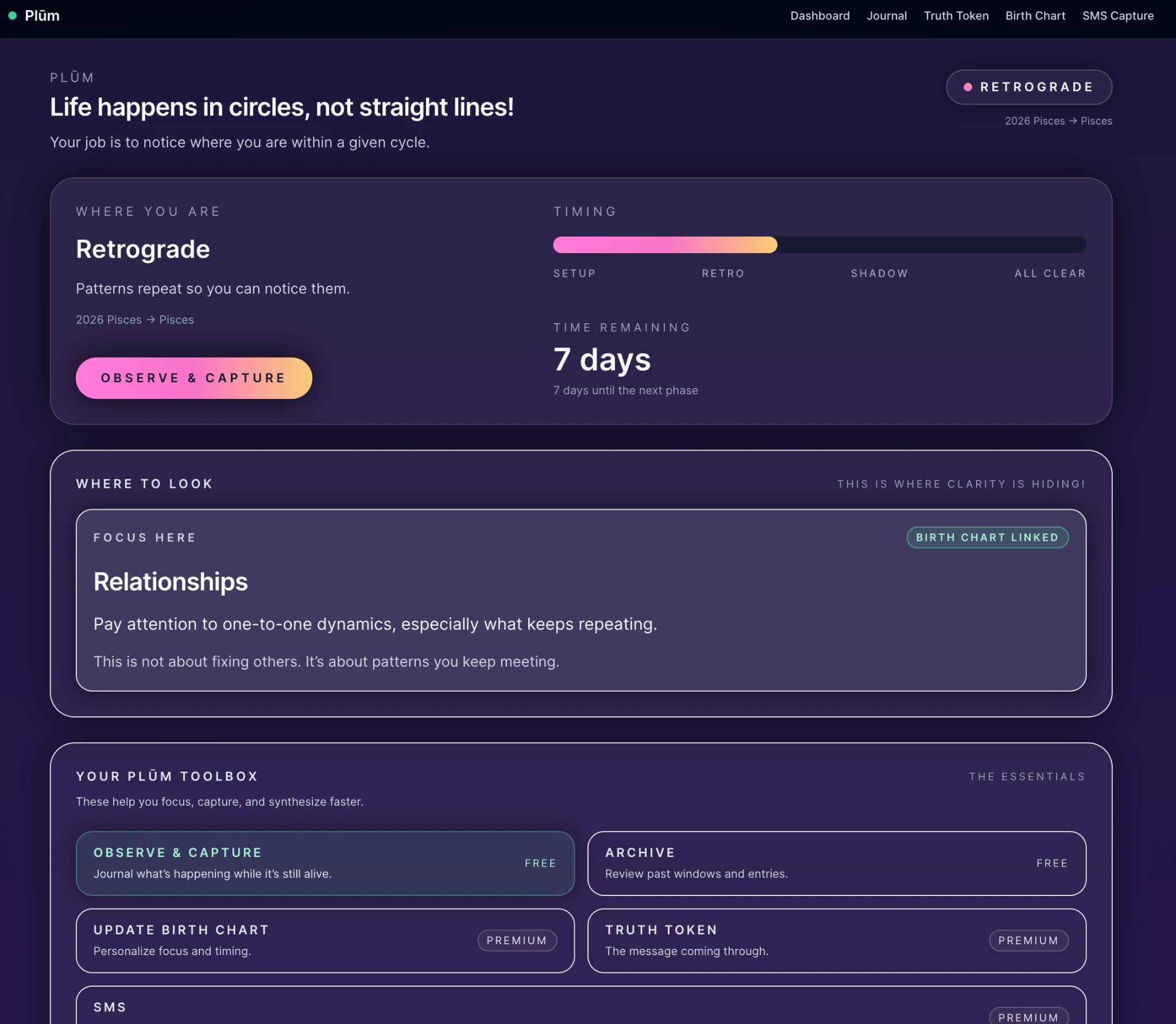
THE PROVOCATION
Journaling tools are good at giving people somewhere to reflect. Astrology products are good at helping people understand lifecyle development. But how does the average person apply age old esoteric wisdom into their already busy lives?
THE SITUATION
Astrologers are constantly advising people to approach retrograde periods with heightened attention. They're told to revisit conversations, double check details, question decisions, and look for patterns. The missing piece was clear direction for getting the most out of these formative time periods.
The astrology created the window. The product shaped what happened inside it.
THE INTERVENTION
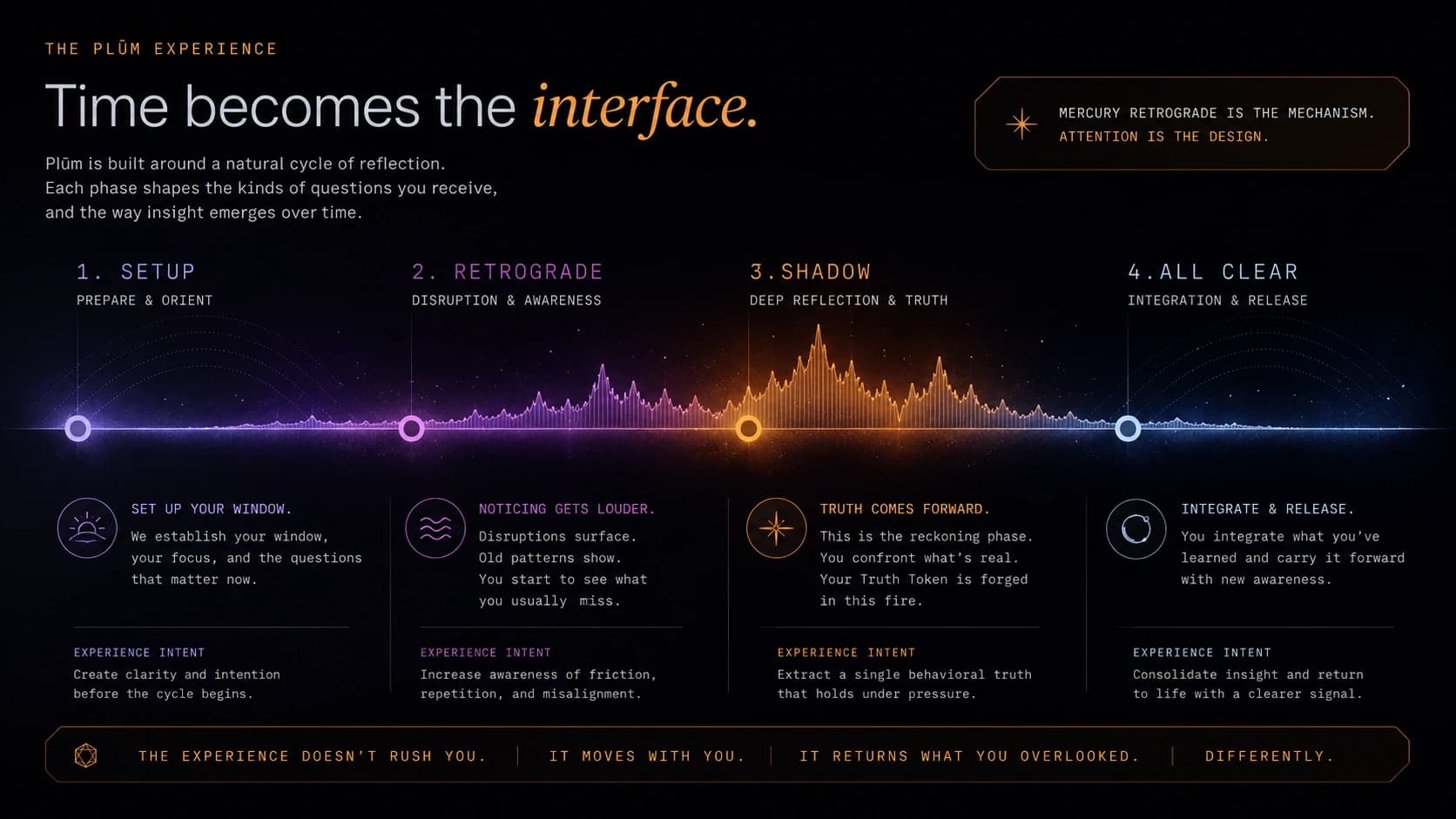
Plūm was not built as one static application waiting to be opened. The experience moved through distinct phases, changed what it asked of the user, and returned earlier material when it could be seen differently.
Give reflection a beginning, progression, and end instead of an endless empty journal.
Narrow the field of observation without telling the user what they are supposed to find.
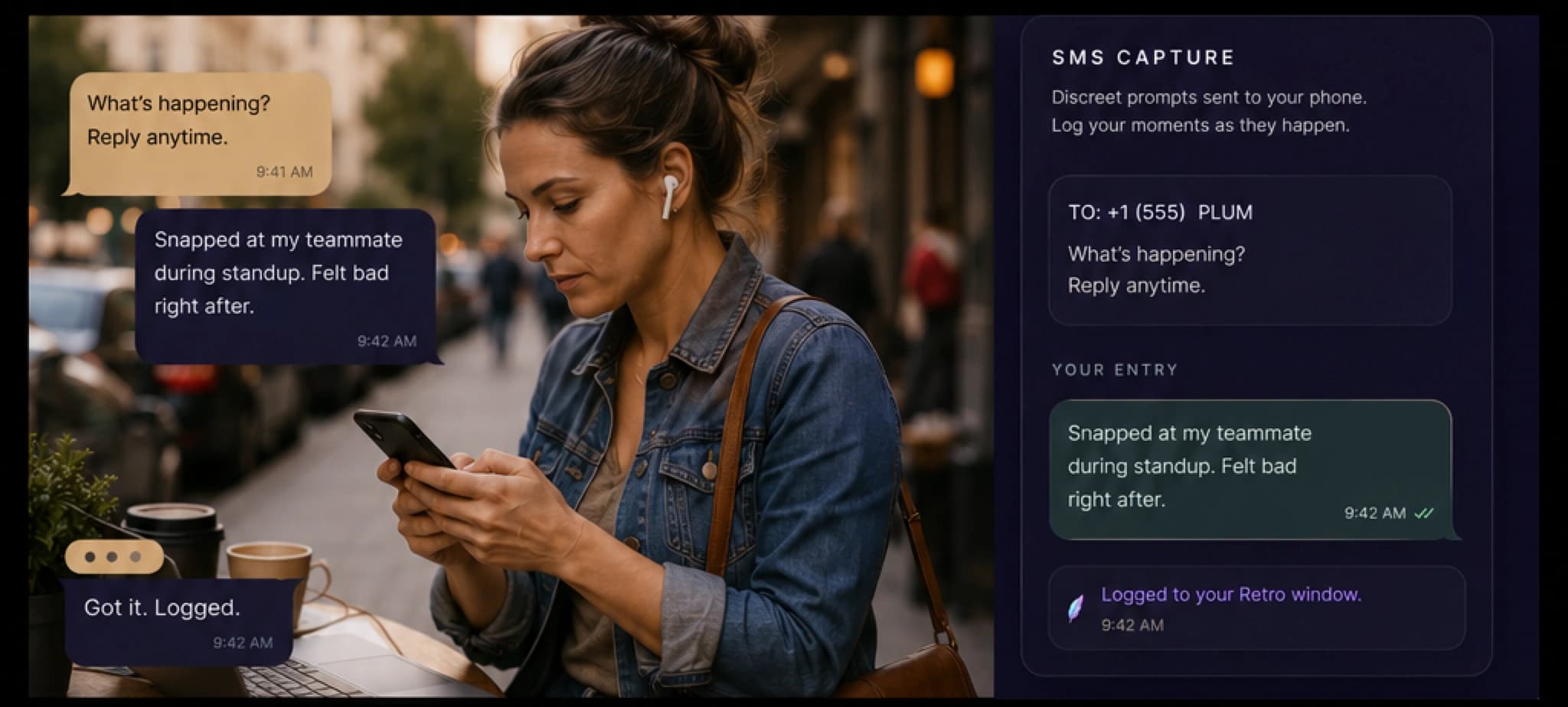
Make it easy to record something while it is still alive through SMS.
Bring previous thoughts back later, when distance and context can change what the user sees.
DIRECT ATTENTION
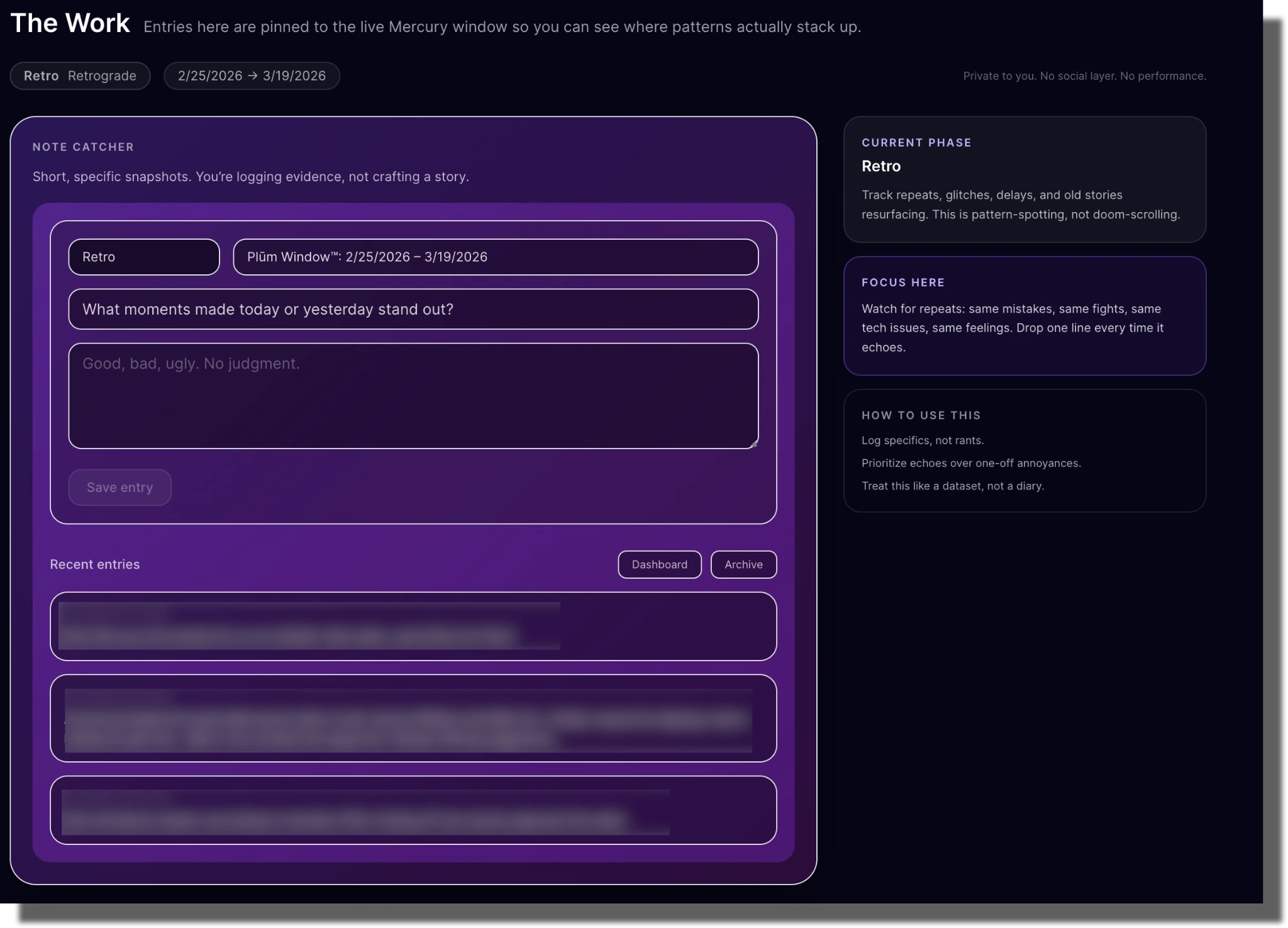
Plūm's role was to help the user notice evidence without manufacturing meaning. The journal was deliberately framed as a place to record short, specific observations rather than perform polished self-analysis.
CAPTURE THE SIGNAL
Insight does not politely wait until someone opens a journaling app. Plūm used SMS so users could record something in the middle of the day, while the emotion, friction, or realization was still fresh. Without ever needing to enter the application.
RETURN IT DIFFERENTLY
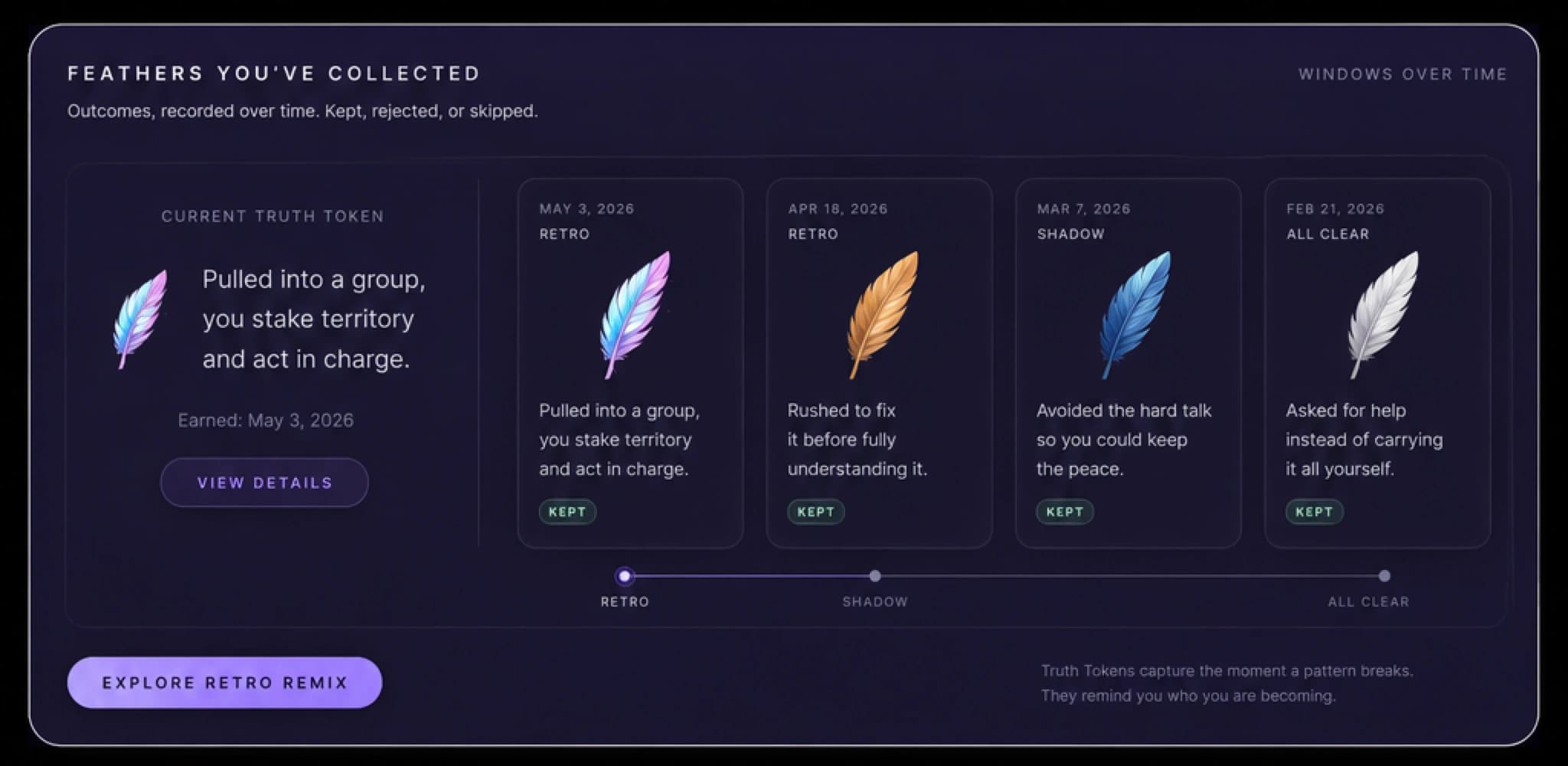
Each reflection became part of a longer pattern. Across windows, those observations accumulated into "feathers", giving users a visible record of the moments, behaviors, and realizations they had chosen to keep over multiple retrogrades.
THEN SOMETHING STRANGE HAPPENED
During the beta, one participant found a blue feather beside their car inside a closed garage. In the context of what they had been reflecting on through Plūm, they experienced the discovery as a meaningful coincidence and as encouragement to keep going. Plūm did not assign meaning to the feather. The participant did.

That distinction mattered. The goal was never to manufacture signs or tell people what their lives meant. It was to create enough attention that they might encounter their own meaning more clearly.
WHAT ALMOST BROKE IT
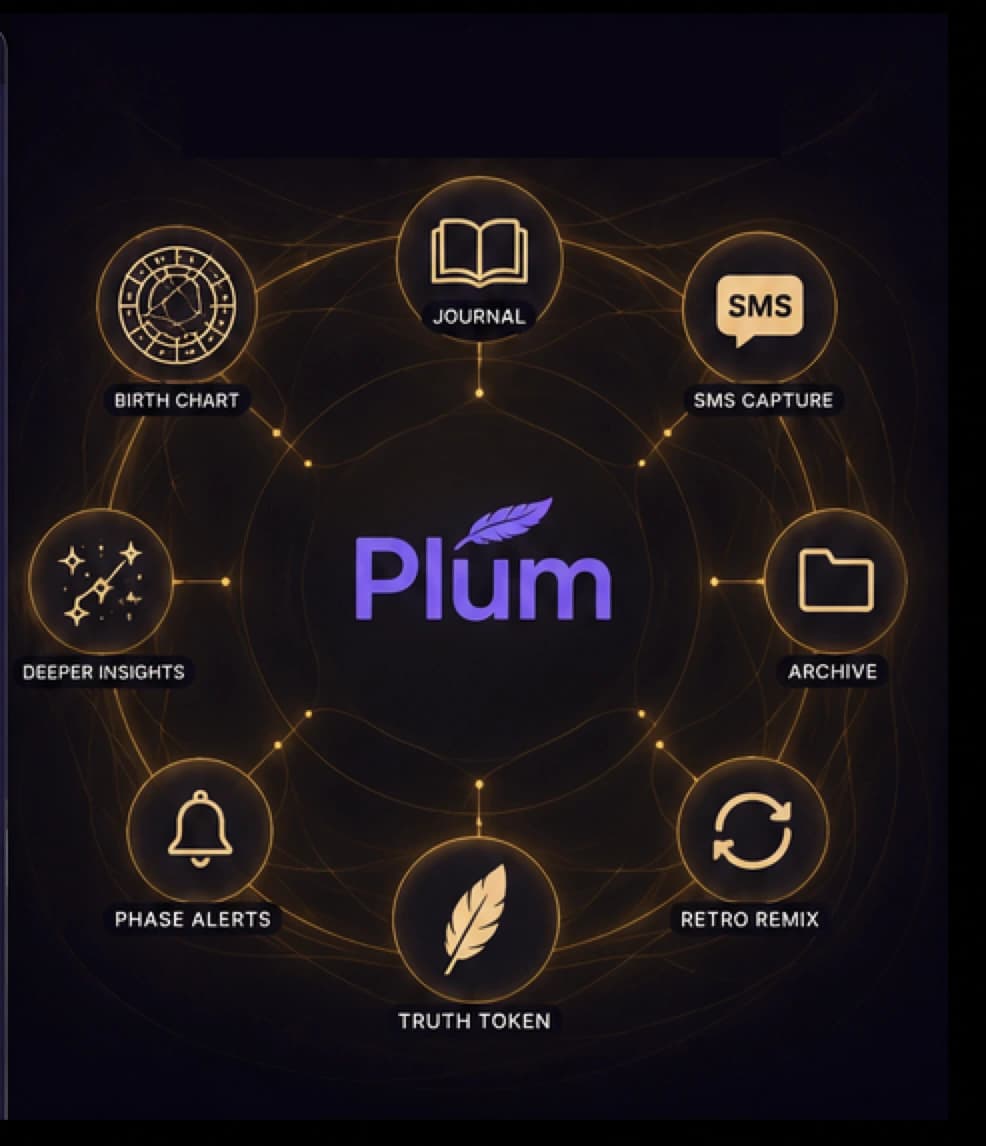
Every new idea felt useful on its own: birth-chart personalization, SMS capture, deeper insights, phase alerts, Truth Tokens, archives, Retro Remix. Together, they threatened to overwhelm the focused reflection experience at the center of the product.
The design problem became subtraction. The real work was choosing what not to build.
MY ROLE
I consulted with astrologers, built the product, defined the experience architecture, mapped the journey across time, designed the interaction model, orchestrated the technical build, ran the beta, responded to failures, watched how people used it, and decided what the product should not become.
The interface was one visible surface of a larger job: creating and operating an experience that had to remain coherent across weeks, channels, technology, and human interpretation.
WHAT HAPPENED
Plūm completed its first end-to-end beta with real users moving through the changing phases, capturing reflections through the product, and encountering their own material again over time. The beta proved the experience could sustain attention without needing to manufacture the answer.
THE TRANSFERABLE PRINCIPLE
Plūm was not valuable because it knew what something meant. Its job was to create the timing, structure, and attention that helped someone recognize meaning for themselves.