Map the terrain
Understand lifecycle stages, recurring friction, customer goals, product behavior, and the places people routinely became lost.
NAVIGATE
Customer Journeys Designed for Scale
THE SITUATION
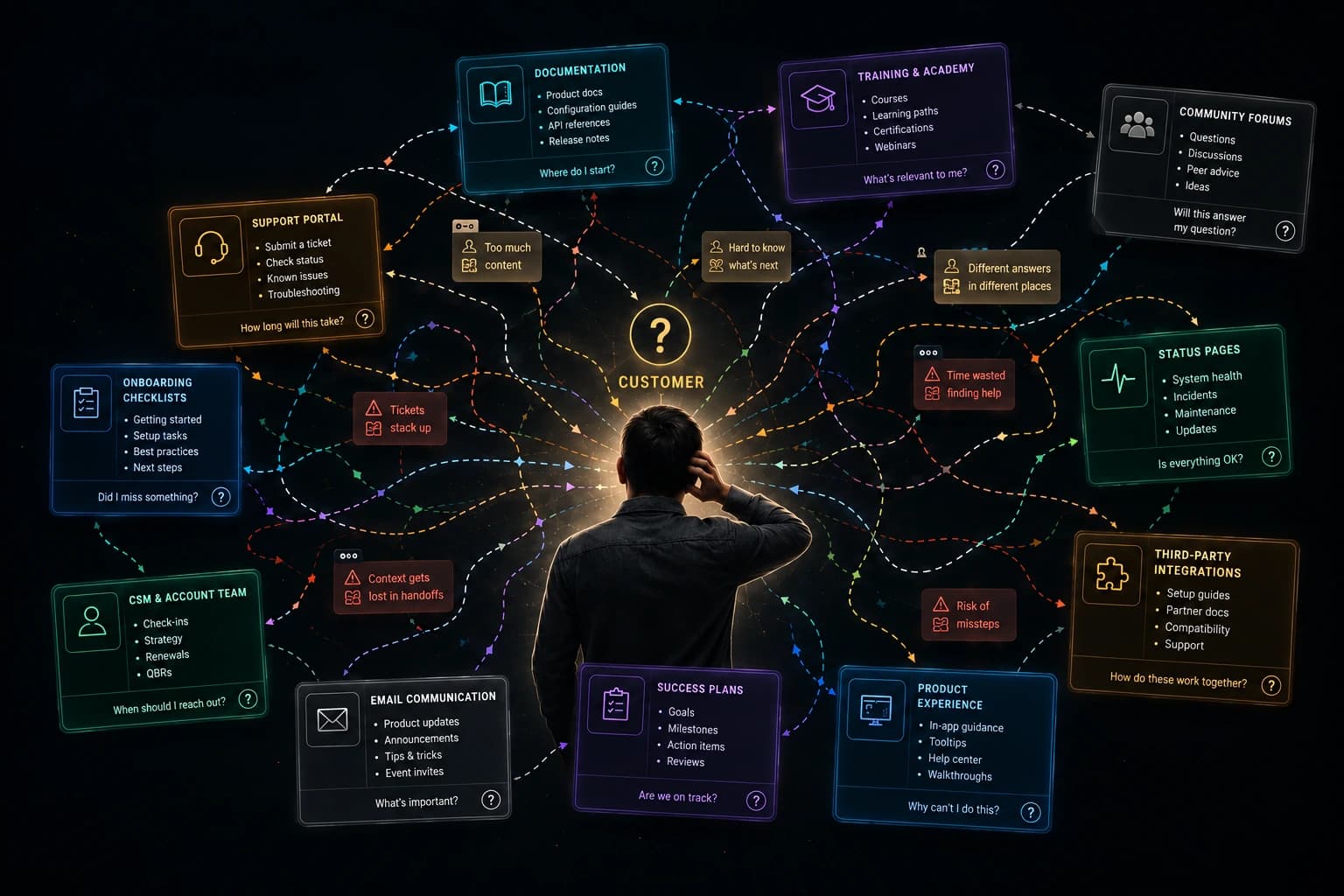
Highly configurable software does not create one obvious customer path. Different organizations buy different products, configure them differently, arrive with different levels of expertise, and define value in different ways.
Guidance existed everywhere: onboarding, documentation, training, support, operating proceudres, and account conversations. But the customer was still largely responsible for assembling those pieces into a cohesive product journey.
THE PROVOCATION
I was hired as an Instructional Designer to help bring order and process to existing guidance materials. The design challenge was not simply to create better documentation, more training, or more customer touchpoints. It was to connect those things around a more useful question:
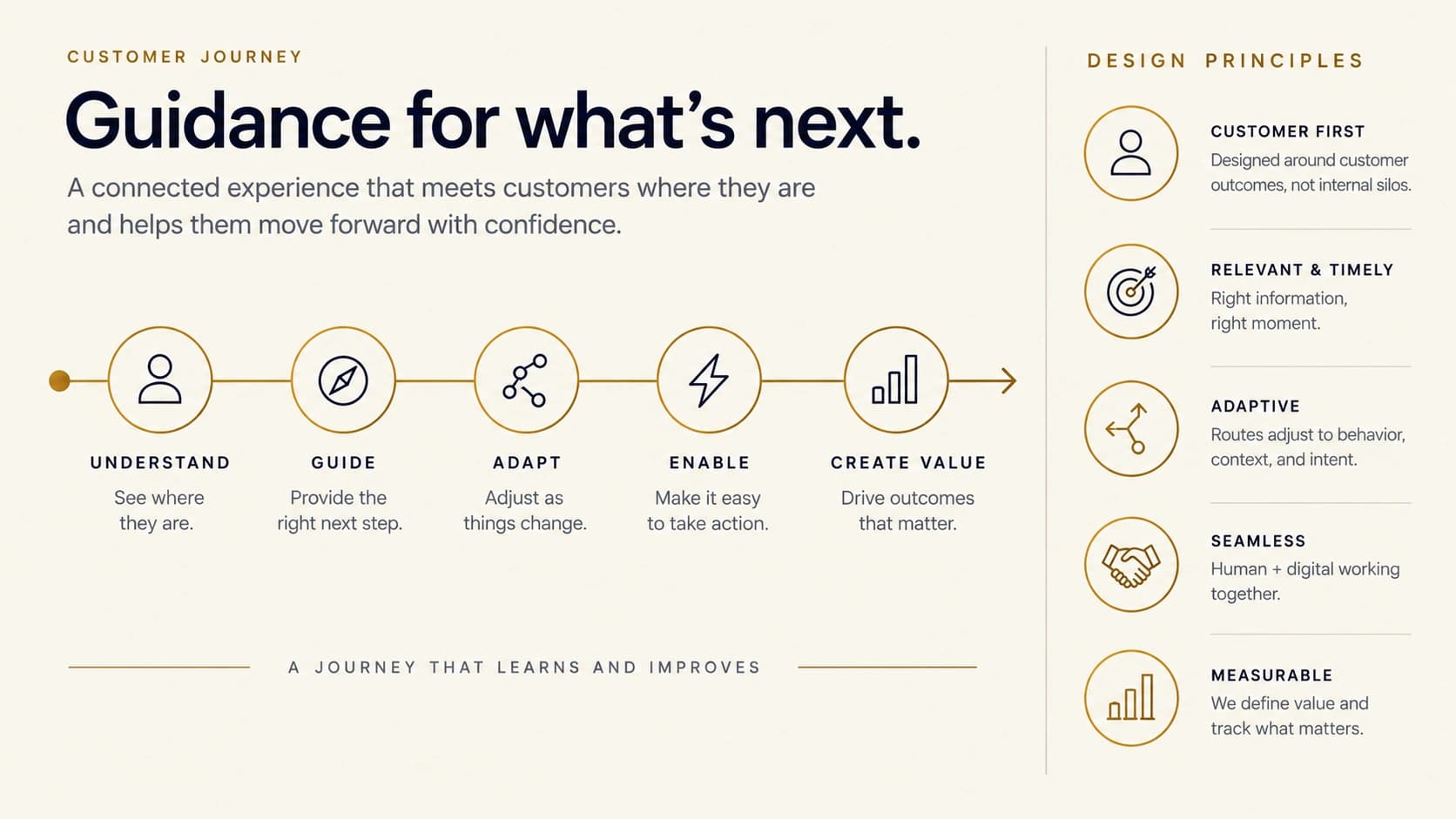
Given who this customer is, where they are, and what they are trying to accomplish, what should happen next?
THE INTERVENTION
Instead of treating each customer interaction as an isolated event, I built a repeatable way to connect context, guidance, and action to customer outcomes. The approach deflected support tickets, improved product adoption, and retained customers... at scale.
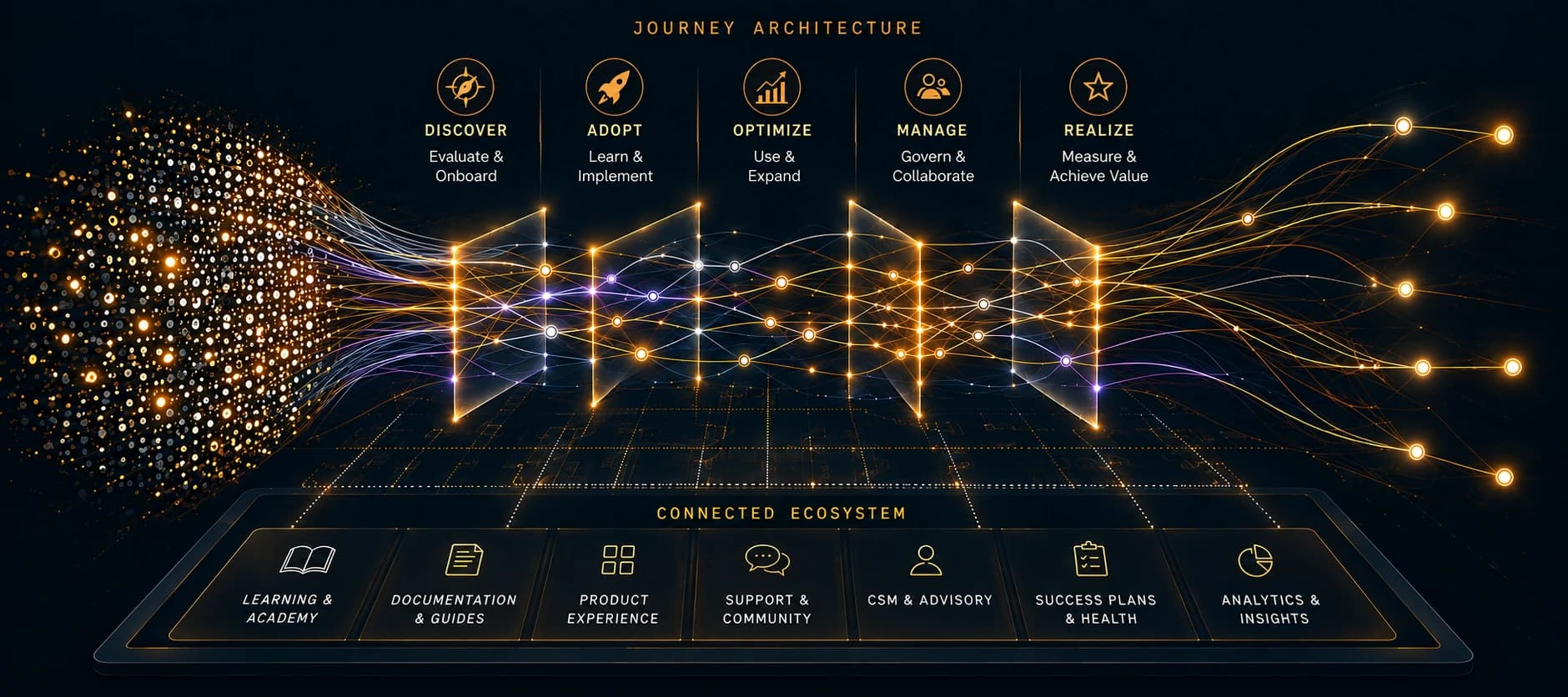
Understand lifecycle stages, recurring friction, customer goals, product behavior, and the places people routinely became lost.
Connect onboarding, education, support, Customer Success, product adoption, and success planning into intentional journeys.
Use product behavior, customer health, business context, and human judgment to understand where a customer actually was.
Turn those signals into the right education, intervention, conversation, resource, or customer action.
THE LEARNING LAYER
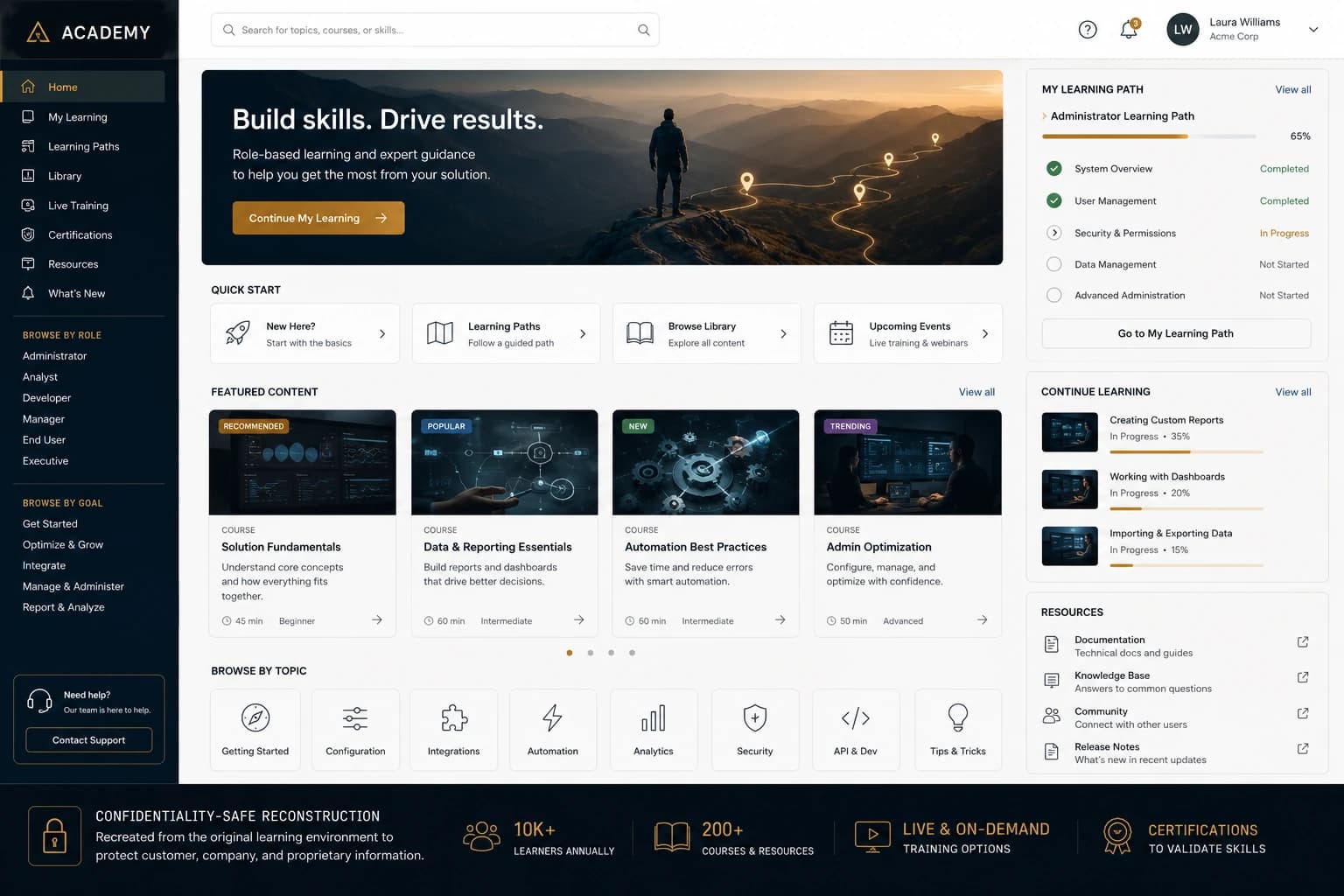
Education became part of the navigation system. When thousands of users repeatedly encountered the same knowledge gaps, the answer could not be thousands of individual explanations.
I built learning paths, technical education, self-service resources, and guided content into an ecosystem that could meet recurring needs without requiring a person to manually intervene every time.
THE OPERATING SYSTEM
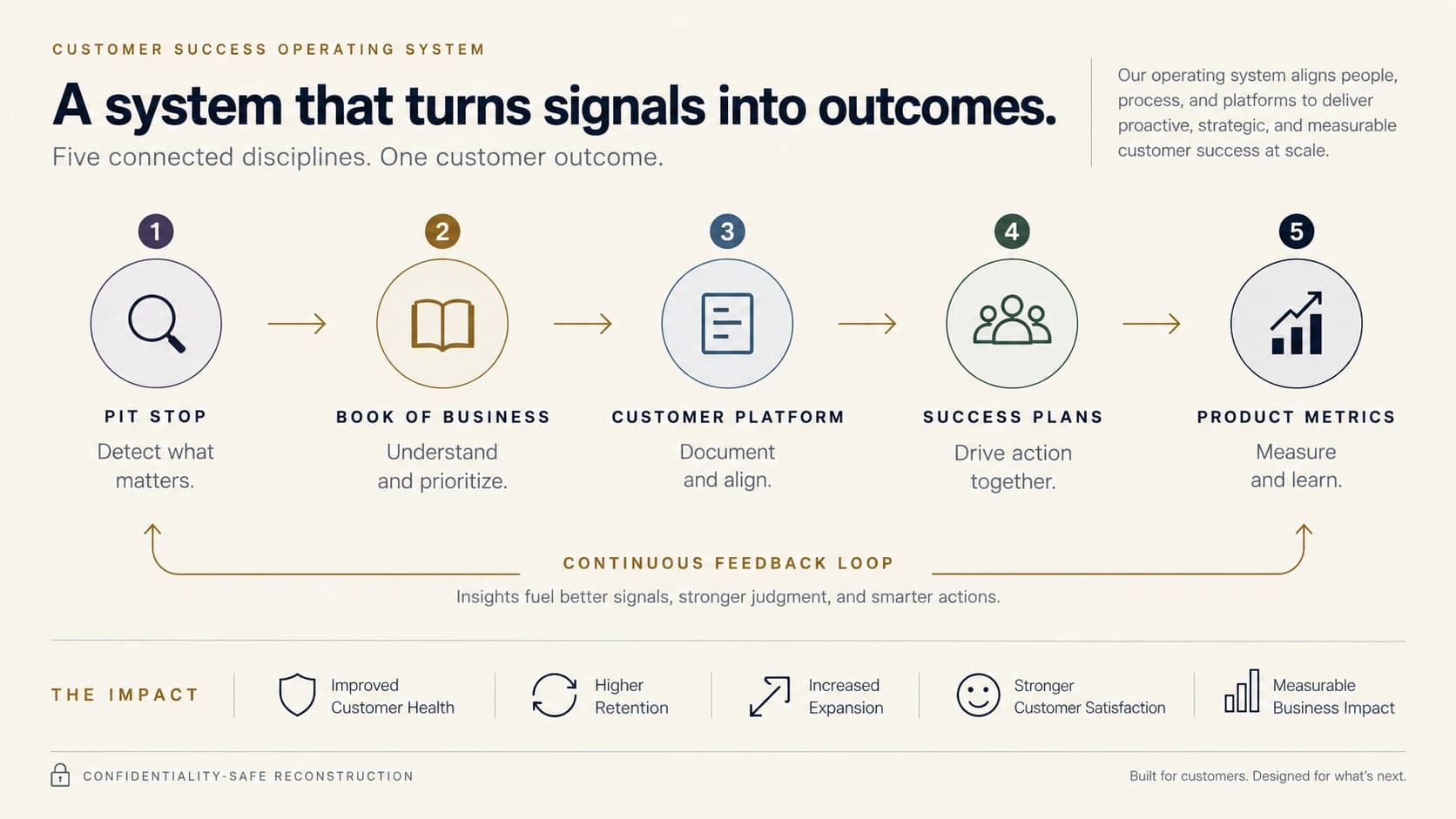
A coherent customer experience required a coherent internal one. Customer Success needed a shared way to detect signals, develop judgment, document action, demonstrate strategy, and understand whether any of it was actually producing value. My role expanded into directing these efforts.
DESIGNING FOR SCALE
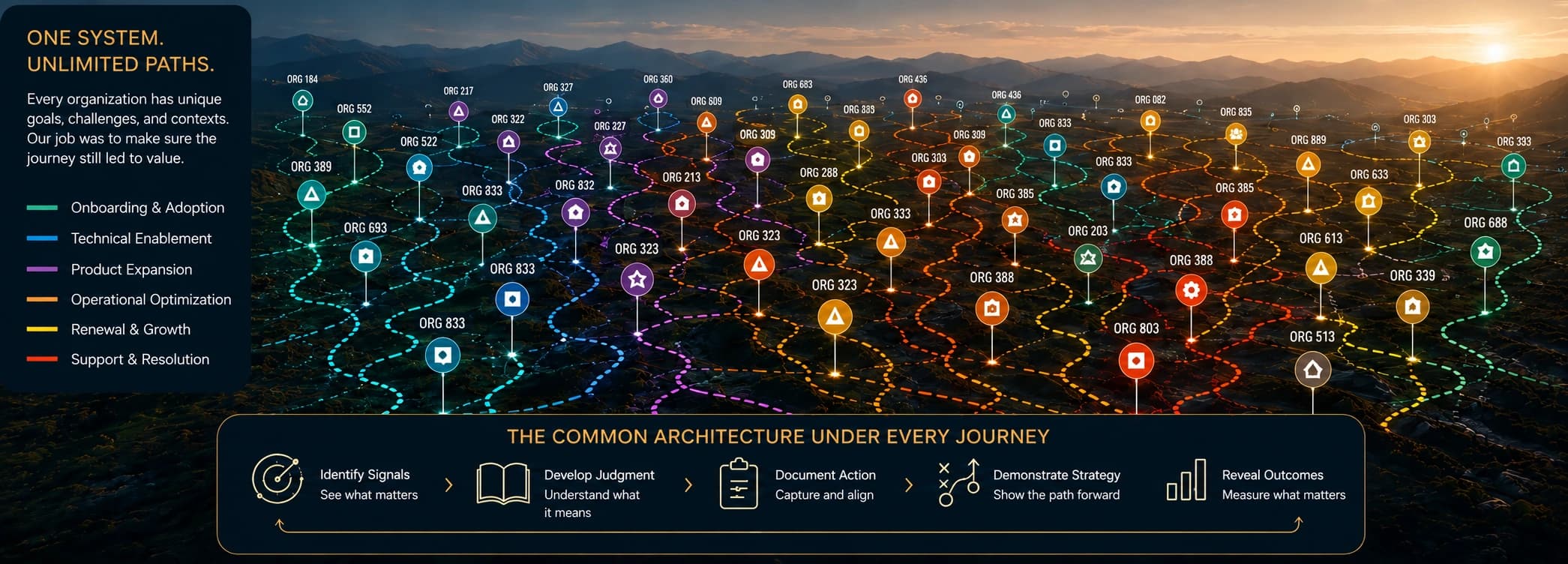
Seven hundred organizations did not need seven hundred completely independent experiences. But they could not all be forced through one rigid journey either.
The system needed enough structure to create consistency and enough flexibility to support different goals, products, maturity levels, risks, and definitions of value.
MY ROLE
Across eight years, I built and evolved the architecture connecting customer education, digital journeys, Customer Success operations, product signals, success planning, and human intervention.
My role moved between strategist, builder, facilitator, operator, and organizational translator. The work was not finished when a framework existed. It had to function across teams, technology, and hundreds of customer organizations.
WHAT HAPPENED
The architecture supported hundreds of customer organizations while the education ecosystem served thousands of learners each year. Across the customer environment this work supported, annual retention reached 94%.
Self-service education also absorbed recurring how-to demand that would otherwise have required one-to-one assistance, allowing human attention to be focused where judgment and partnership mattered more.
THE TRANSFERABLE PRINCIPLE
Designing for complexity is not the same as simplifying everything. It is creating enough structure that people can understand where they are, recognize what matters, and confidently make the next move.