Identify what would be lost
Find the exploration, peer exchange, practice, choice, recognition, discovery, and informal learning hidden inside the physical format.
LEARN
The Pandemic Pivot
THE SITUATION
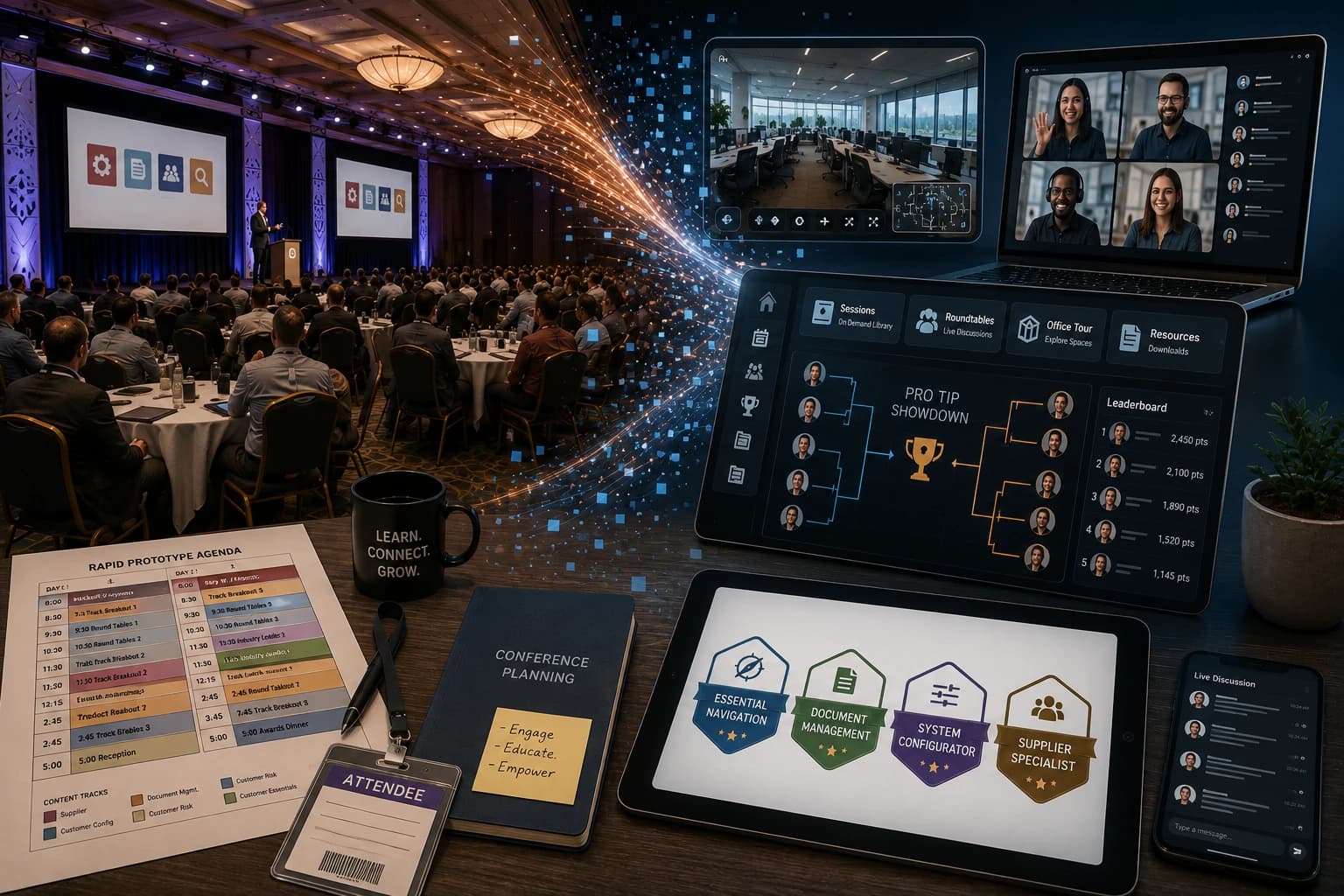
The technical learning program inside the conference was deliberately different from a traditional sequence of product presentations. Customers moved through differentiated technical tracks, breakouts, industry roundtables, certification, peer learning, and hands-on experiences.
The broader conference was a cross-functional production. My responsibility was the learning experience within it: the curriculum, pathways, facilitators, technical sessions, certification, and the mechanisms that helped customers learn from one another.
The venue wasn't just where the learning happened. It was part of how the learning worked.
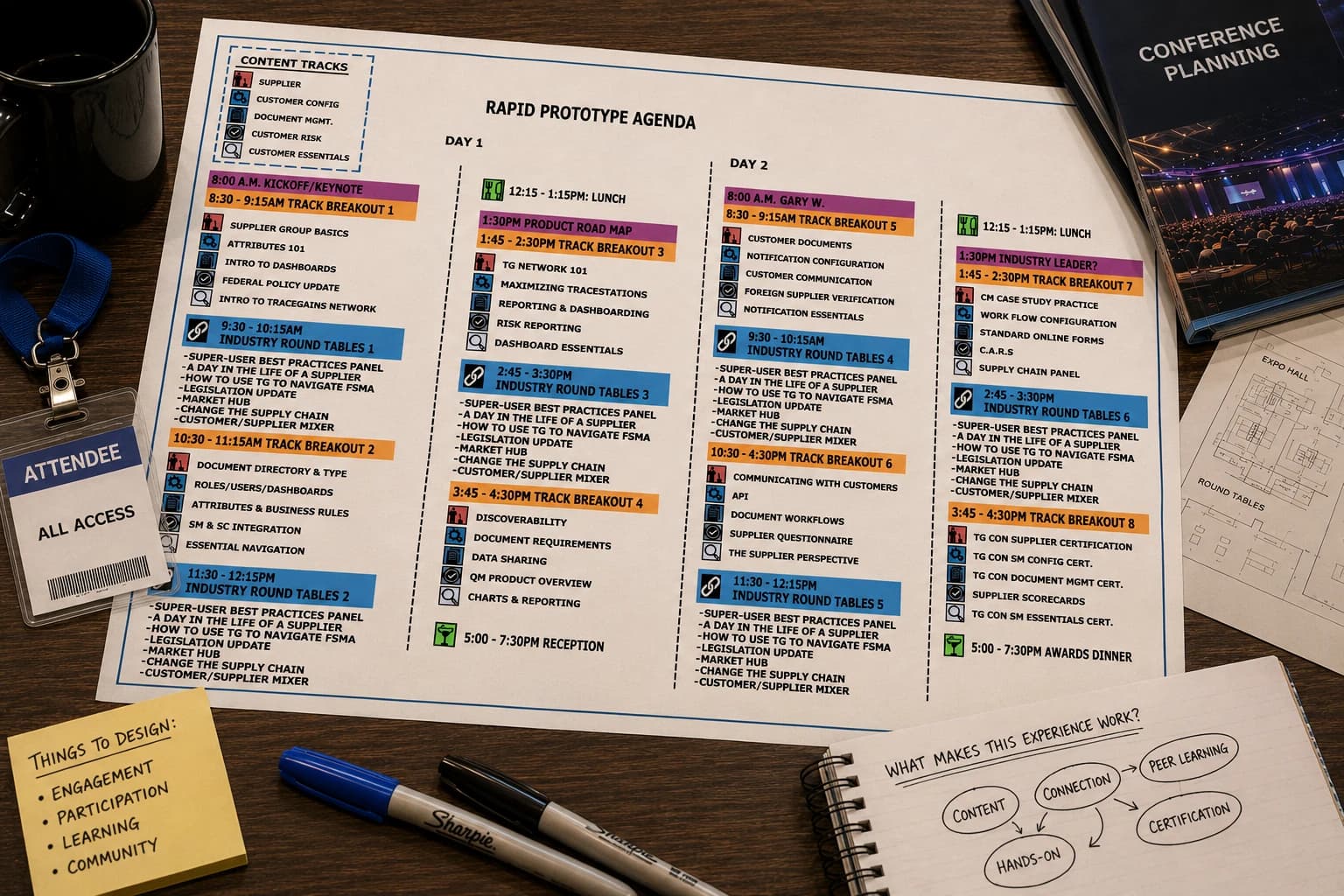
THE ORIGINAL ARCHITECTURE
The physical learning environment depended on simultaneous tracks, audiences, facilitators, rooms, transitions, choices, and informal interactions. The agenda was more than a schedule. It was a map of how people moved through the learning experience.
THEN THE ENVIRONMENT DISAPPEARED
There were no rooms to move between. No table to join. No hallway conversation. No certification room. No wandering into something unexpected. No shared physical environment holding the experience together.
The obvious answer was to put the sessions online. But that would have preserved the content while discarding many of the behaviors that made the learning valuable.
THE PROVOCATION
The question changed from "How do we make this conference virtual?" to something more useful:
What did being there make possible, and how else could we make those things happen?
THE INTERVENTION
Instead of trying to reproduce the physical conference online, I separated the mechanisms from the learning behaviors they had been enabling.
Find the exploration, peer exchange, practice, choice, recognition, discovery, and informal learning hidden inside the physical format.
Treat rooms, roundtables, certification stations, and hallway conversations as mechanisms rather than the objective.
Find digital mechanisms that could create participation, exploration, peer learning, achievement, and recognition on their own terms.
Connect those mechanisms into a coherent technical learning experience rather than a collection of online presentations.
RESTORE EXPLORATION
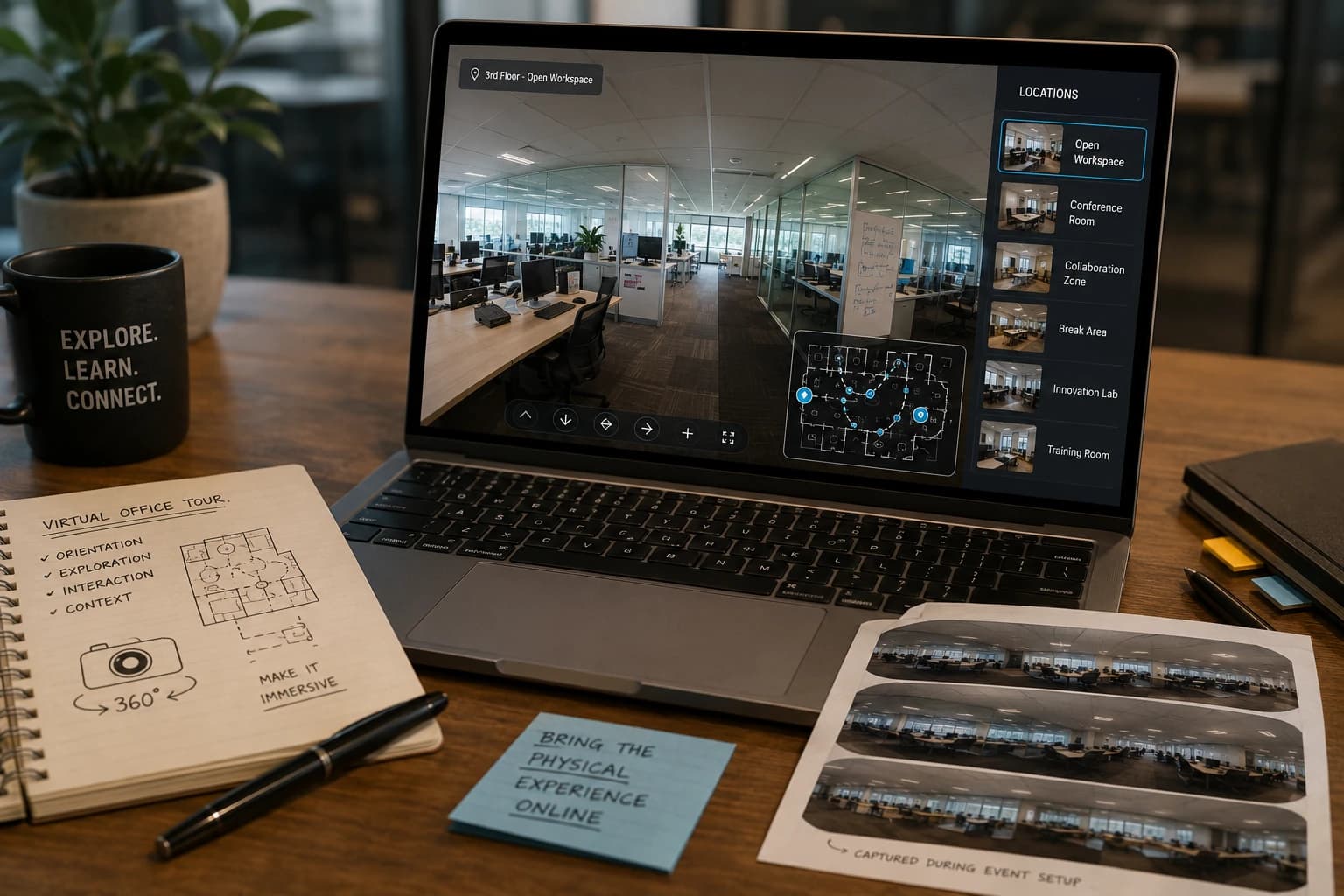
One of the quiet pleasures of an in-person event is discovery. People look around, wander, and encounter spaces and ideas they were never explicitly sent to find.
I captured the company's physical office using a 360° camera and built an interactive virtual tour, giving remote participants a place they could move through instead of another page they could scroll.
It wasn't necessary for delivering technical content. That was precisely why it mattered.
RESTORE PARTICIPATION
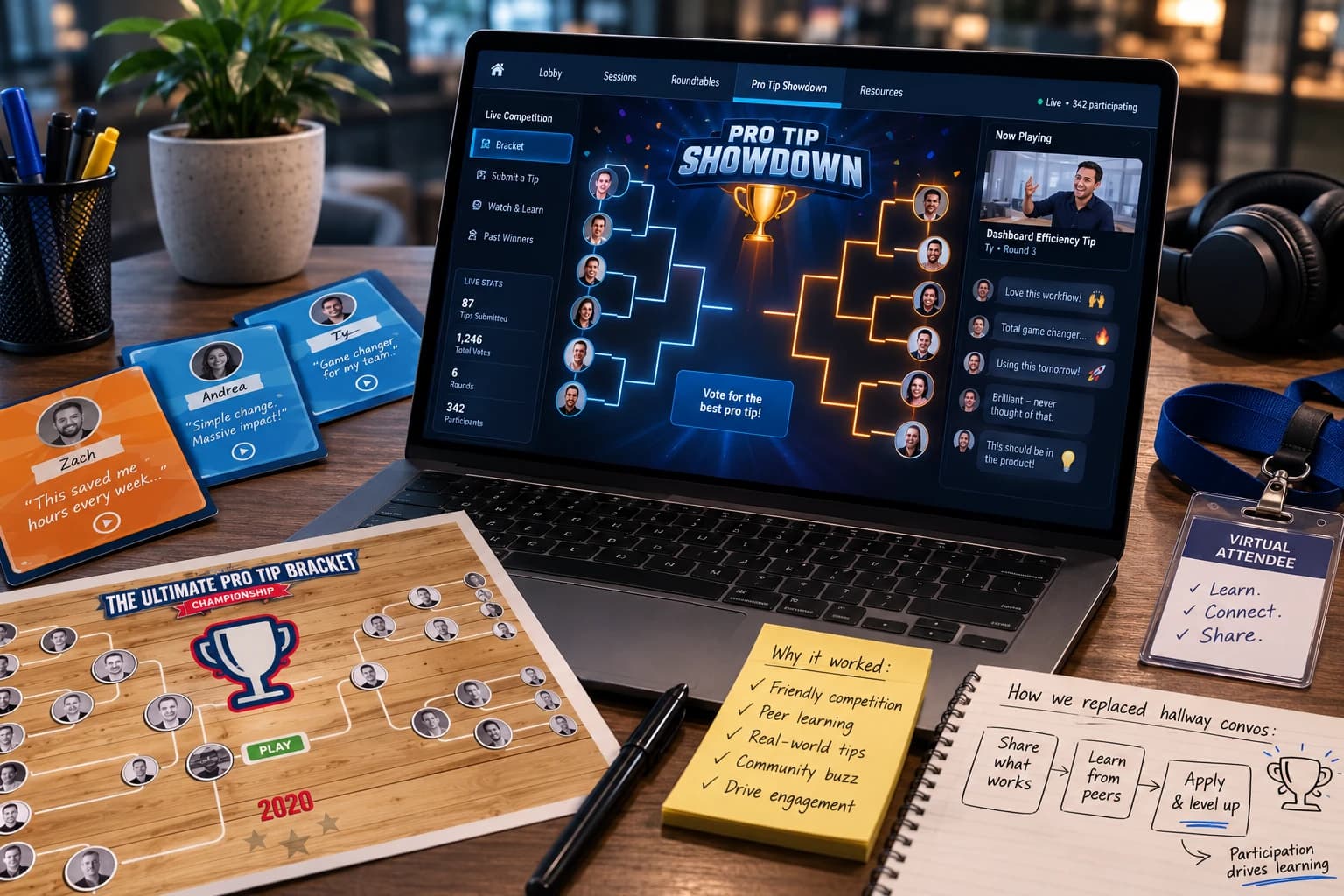
Some of the most useful learning at a conference never appears on the agenda. It's the shortcut someone mentions between sessions, the workaround discovered six months ago, or the tip one customer passes to another over lunch.
Moving online threatened to erase that layer of peer knowledge. So I turned it into a competition.
The Pro-Tip Showdown invited participants to contribute practical knowledge, transformed those submissions into a tournament, and created a reason for the community to compare, vote, compete, and learn from one another.
People weren't consuming another resource. They were helping create one.
PRESERVE THE DEPTH
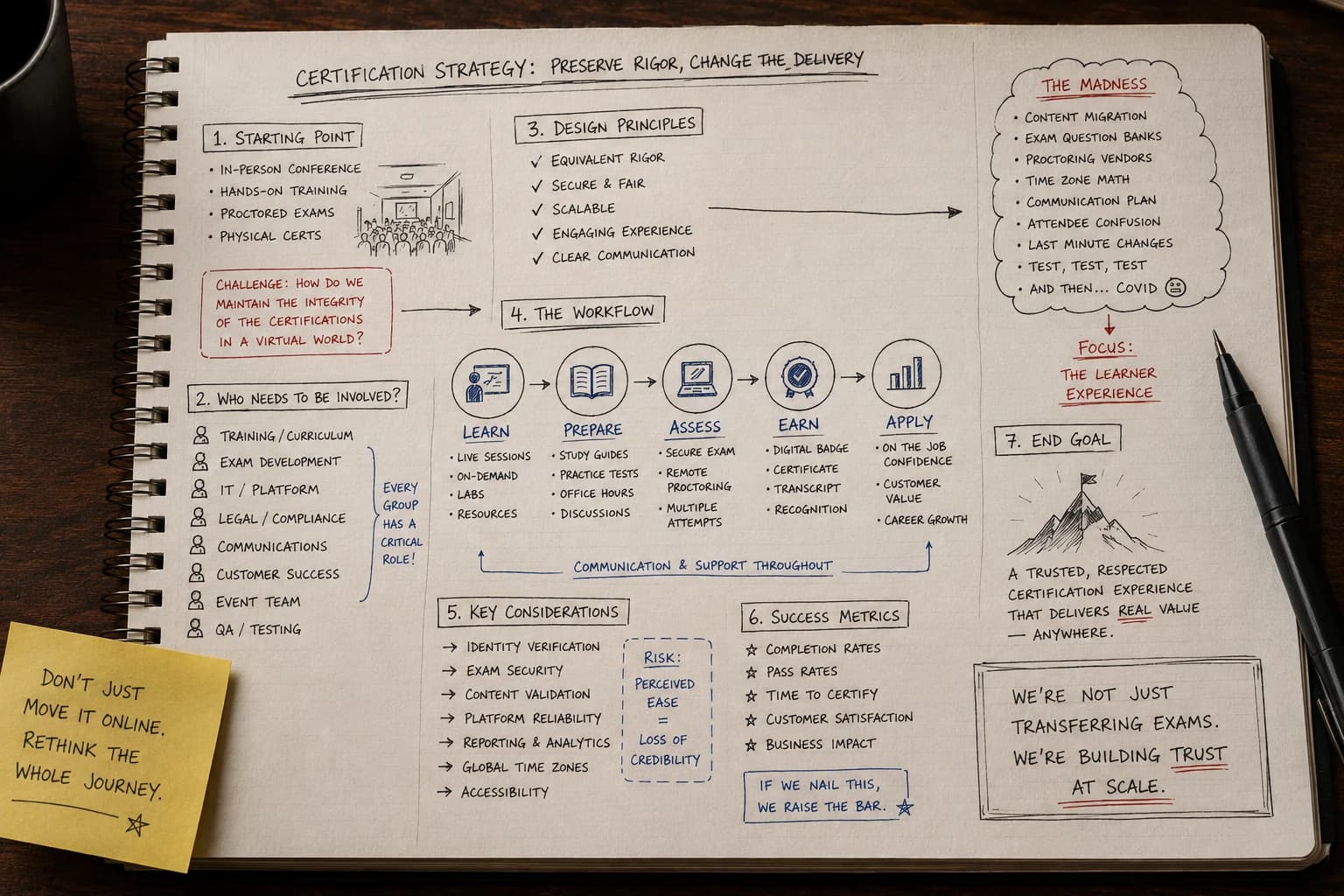
The playful pieces supported a serious technical learning environment. Certification and advanced learning still had to represent credible product competence even though nearly every condition surrounding them had changed.
That meant thinking beyond the screen: learners, instructors, subject-matter experts, technology, assessment integrity, support, accessibility, credentials, and the handoffs between all of them.
The problem wasn't "How do we move an exam online?" It was "How do we preserve confidence in the learning when the conditions around it change?"
MY ROLE
The conference itself was a cross-functional effort. My responsibility was the technical learning ecosystem: curriculum architecture, differentiated tracks, facilitators, peer-learning formats, certification experiences, and the mechanisms that helped customers turn product knowledge into capability.
When COVID changed the environment, I led the translation of that learning experience into virtual formats while working alongside the teams responsible for the broader event, technology, communications, and production.
My job was not to make the conference virtual. My job was to make sure virtual still meant learning.
WHAT HAPPENED
Without travel as a requirement, digital participation increased. Certification participation and completions increased with it. Customers contributed over 125 Pro-Tips, turning their own expertise into part of the learning environment.
THE SIGNAL
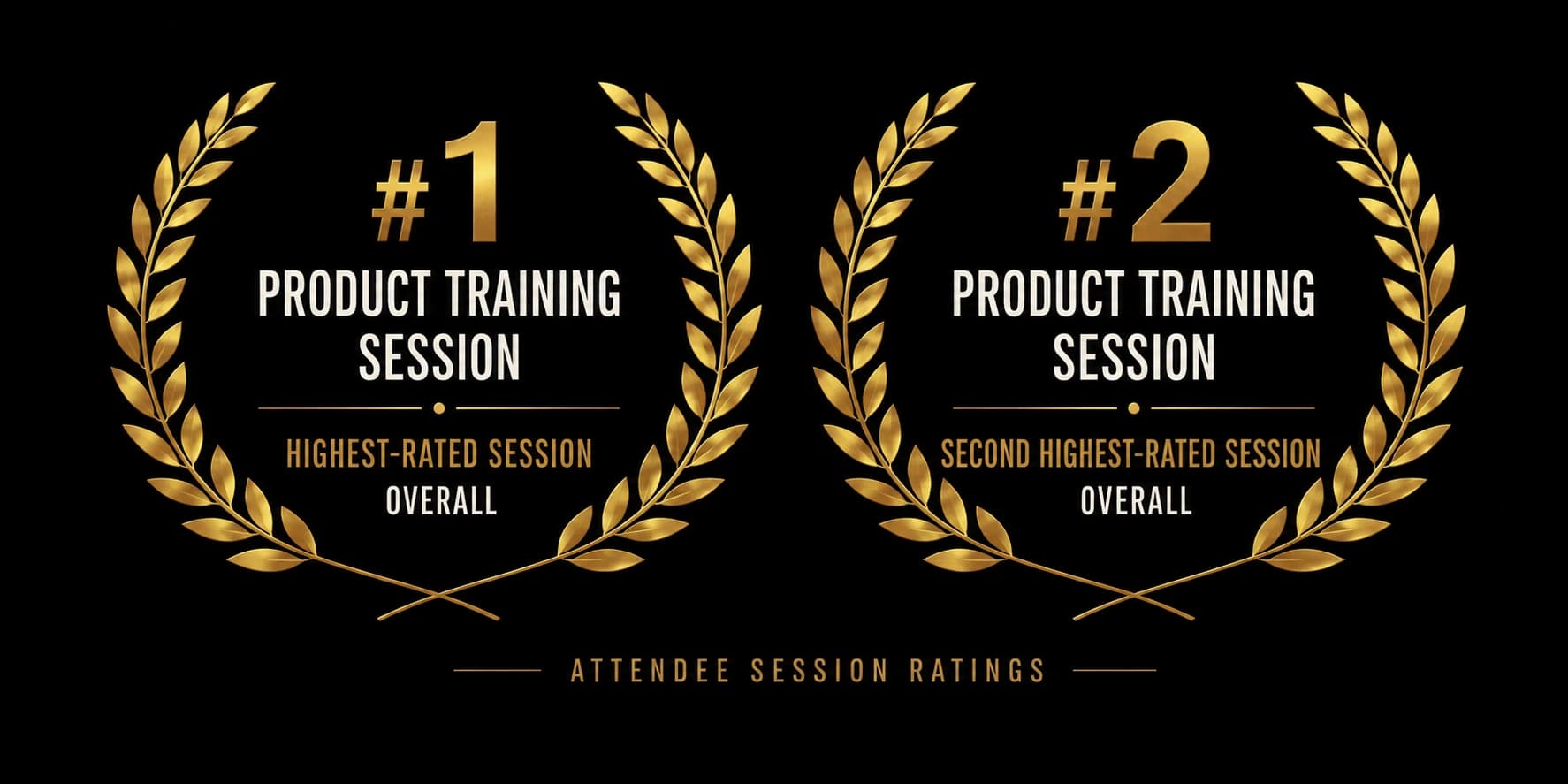
When attendees rated the event's sessions, the two highest-rated sessions overall were both training sessions.
THE LONGER TAIL
The virtual experience accelerated adoption of a newly designed customer Academy and demonstrated that technical education did not need to be constrained by an event, classroom, or physical location.
What began as a response to COVID helped establish virtual customer learning as a meaningful competitive differentiator. The Academy architecture continued to grow after the event rather than retreating when in-person experiences returned.
THE TRANSFERABLE PRINCIPLE
Rooms, stages, agendas, screens, and platforms are mechanisms. The deeper design question is what those mechanisms allow people to do, discover, understand, and accomplish.
Preserve that, and the experience can survive almost any change.